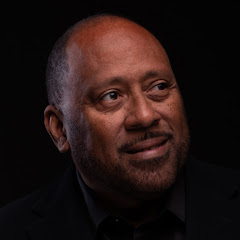
0:06 Welcome once again to the Frank Ski Frankly Speaking podcast. And today I am joined by one of my favorite people in the whole world. Um, most of you may know him, but if you don't, please understand he is probably one of the most powerful African Americans in the world and especially in this country right now for many different reasons. But we're going to find out why. And what makes him move and what makes him tick and what does he consider important.
0:33 The mayor of the great city of Atlanta, Georgia, Mayor Andre Dickens. Good to see you, brother. Good to see you too, Frank. How you feel, man? You good?
0:40 I feel great, man. I'm glad to be here with you, man. I love spending time with you, and this is a great format to do it. So listen, I just want to let everybody know, um, this is a casual conversation. This is not about your resume.
0:53 Good. I don't want to know about your resume. Yeah, this is about you as a person. So I've opened up some good wine. You know, we drink good wine together.
1:01 That's right. Okay. It's in the evening. He's not working, and we're going to have a great conversation. So for people that are going to watch this that aren't in Atlanta and may not know who Andre Dickens is, who is Andre Dickens?
1:15 I think I'm a complex individual with a lot of faith, is what I say. I'm a person that has always believed. I'm a son of a wonderful mother, Sylvia Dickens. Sylvia, a single mother, raised me and my sister in Atlanta. So I'm an Atlanta native, and I've always had the desire to be the mayor of Atlanta since I was 16 years old.
1:42 Wow. So I'm a believer in dreams coming true because that dream did come true. Very spiritual. My mother had me in church and Sunday school at an early age. I remember all those Sunday school lessons and I apply those to this day.
1:58 So I'm a good friend. And one of my biggest moments is that I'm a father. I'm the father of a 21-year-old daughter, my little girl. Wow. Even though she's 21, she grown now.
2:10 Big grown. But yeah, man, I love people. I love just sharing and giving and exploring too. I know you've traveled the world and I've traveled the world. So I love Atlanta, but the world is a place I want to continue to see.
2:27 You know what's amazing to me is that there's an event we do in Atlanta called the Mayor's Mask Ball. Yeah. Right. And for everybody watching in every other city, it's a huge event. We raise a lot of money.
2:41 And what it is, is you do a ball to raise money for scholarships. Scholarships. Yeah. Right? That event in and of itself is a huge undertaking.
2:54 But there's another event that I want to talk about that's actually more dear to my heart, and that is the one you do called the Senior Ball. Oh yeah. Okay. Yeah. So the Senior Ball, I really got a chance to see who you are.
3:10 And let me say this, we've been friends for a long time. Yeah. But for everybody watching this podcast, the Senior Ball is you open up like 5 ballrooms in a huge hotel, like 3,000 seniors. And you give them transportation, you give them free tickets. They come and they have a huge ball.
3:31 They put up their best. And these are seniors from everywhere, from senior citizen homes, from everywhere, all over the city. And they all come together. But what I really got a chance to see about you is you walked into the room, everybody was hugging you. Everybody felt like you were their grandchild.
3:51 Yeah. In that room, like you were Andre, right? Yeah. You weren't the mayor anymore. You were just Andre.
3:57 Yeah. And you went in there and then you got on the floor and danced. Yeah. And partied with these seniors. Yeah.
4:04 And it really showed me that you're not just the mayor of a great city of Atlanta. You're a real son. That's right. Of this city. Hey, absolutely.
4:13 I love the senior ball and It comes up every fall in Atlanta, and we had 3,000 last year, and it continues to grow. So now we got the Georgia World Congress Center this year. We're going to have almost 5,000 seniors. Whoa. And we end up having people like the Temptations, the Whispers, etc. , etc.
4:33 These are the caliber of music, and it's free. And we have the legendary Frank Ski, come on, you know, DJing, keeping the tunes going. We have You know, they put on their best dresses. We have themes. This year's theme is a Bridgerton sneaker ball.
4:49 Oh my God. I don't know who be coming up with these ideas. Actually, I do know. The co-chair of the ball this year is my mother, Sylvia Dickens. That's what I'm talking about.
4:59 So she's the co-chair. She said it's gonna be a Bridgerton sneaker ball 'cause our feet can't be out there 4 hours. There you go. In heels and stuff like that. So it is amazing time.
5:09 And these seniors, they're still active. These are, The youthful seniors, Black women usually, that wanna get out there and dance. They were the prom queens. They were the ones that was chasing their sons and daughters on the basketball and T-ball court, getting them all ready. And now they're just senior citizens with that still, that youthful spirit.
5:29 They're dancing with me. Now they're strong 'cause they'll be spinning me around talking about, man, it's my time, it's my time. It's thousands of them. They all want their individual time. And they're like, Andre, Andre, I was your 5th grade teacher.
5:41 I worked with your mama. I was in church with you. Don't you turn. Hey, turn with me. And so I get to dancing, and now they got cell phones, so they want selfies and stuff.
5:51 I say, are y'all 22 or are y'all 72? Wow, that's what I love about it. Yeah. So let me ask you this. Growing up being the son of a single mom— yeah, which your mom is amazing.
6:04 Thank you. What was the very young Andre like? I'm talking like 5, 6, 7. Yeah. So I'm the youngest grandchild.
6:14 I'm the second grandchild of my— so my mom had my sister and then me, but I was the first boy out of everybody. All my aunts and uncles, they didn't have any children until my sister and then me. So I was very much taken care of. My aunts would take me around. We rode MARTA everywhere.
6:33 So they'd take me to the various places downtown and here and there, showing me the city. I was everybody's kid. My aunts would say, yeah, this is my son. I was really their nephew and all this stuff. So I was seeing my city at age 3, 4, 5, 6 years old.
6:48 I was just all over Atlanta experiencing this beautiful city. And my mom worked like crazy. She worked for the phone company to pay the bills. So she went to work every day, she handled her business, and she even saved up enough to buy a house. We moved out of the apartments and we moved to a house in Adamsville in Southwest Atlanta.
7:08 It's a working-class community, but she always was on time with her bills. Would see people get their stuff put out, not us. My mom was always faithful to her commitments of taking care of this family. Wow. So, so she was a strict disciplinarian though.
7:23 So she would make sure that her son— her goal was that I would go to college. She was like, you better not be out here doing this foolishness. Because I mean, I was still in the, in the '80s and late '70s and '80s in Atlanta. You had drugs, you had a lot of homicides, you had the missing and murdered children. My mom— I was a latchkey kid because, you know, you get off the school bus at 2:30, 3 o'clock.
7:44 I had to go in there, um, open the door, call my mom. She'd be like, all right, unthaw the meat, take off your school clothes, put on your play clothes, do your homework, and you can't go outside till you tell me that your homework is done. I'd have to call that office every single day to let them know I'm home, and then I call again and say my homework's done, and then she said you can go outside. Wow. And so I got really good at math and science because I wanted to get outside.
8:08 Yeah, because all these little hood dudes was out there, come on, Andre, we need another man for ball. Yeah, this is— they're yelling and I'm coming, I'm coming. I was doing my homework, getting ready, handling all the things that my mom had me to do, the chores. But that discipline, I mean, she'd fire me up if I didn't do what I was supposed to do. She'd cuss me out, she'd light me up.
8:26 But that made me be who I am today. I'm on time, and when I need to be on time, I'm on schedule. I don't make no unnecessary, unforced errors. Sylvia Dickens is still watching me today. Wow.
8:39 And that discipline got me tight, right tight. So much so that the boys in the neighborhood, they'd be like, uh, Andre, like if I wanted to go late, they'd say, hey, we about to go handle some business, we about to go do this, we about to go do that. I mean, I want to go. Like, no, no, no, not you, player. Not you, Dre.
8:55 You stay here. We gonna go do what we gotta do because we ain't about to hear from your mama. Yeah. And I would— they would go do what they gonna do. Yeah.
9:03 And I'd be sitting there like, how was it? What was it like? Did y'all do whatever? And I'm like living through them. But my mom put the fear of her, put the fear of God in everybody in that neighborhood.
9:15 And I became the first in my family to graduate and go to college. Wow. Yeah. So let me take you— let's go back for a minute. Do you remember what your first childhood favorite book was to read?
9:27 Oh, yeah. So there was 2 books. One was that— I love that picture Bible, the one that told you all the stories. It had all the Pictures. It was all white Jesuses and Moseses, but I loved it.
9:40 It was a book that I liked. You asked me, that's what I'm telling you. But then there was this book that was called How Things Are Made, like how things work or something like that. It would tell you how a refrigerator worked. It would tell you how a car worked.
9:54 It would tell you how a telescope works or all these just things. And I would just love this book over and over and over again. So I became kind of this tinkering person, learning how to take a clock radio apart, put it back together. Somebody cassette tape don't work, I figure it out. So just learning stuff because this book, remember, we didn't have no Google or YouTube back then to learn stuff.
10:20 So the Bible and then that book. And then I had all the Cat in the Hat, the Dr. Seuss, all those things. So we progressed out of that. But I remember by the time I was like 3rd grade, I was reading books that was— I didn't know what STEM was, but it was like how things are made or what makes things work. I remember that book to this day.
10:43 And then so much so that I saw that book on Amazon and I told myself, I need to buy that book because I remember and I didn't. So now this reminds me I should. Okay, I'm going to get it for you for Christmas. Yeah. So it's interesting.
10:56 So when I was the same age, one of my father's friends gave me— I used to love space, everything space— and gave me the blueprint. It was a book of the blueprint It was like this thick of the blueprint of every room inside the Starship Enterprise from Star Trek. I never knew it existed. And I used to read that book every single day. And I became just like you.
11:22 I used to think I could fix— and to this day, I can fix almost anything. And YouTube helps me out so I don't mess up like I used to. But it really kind of changed my character as a person. You know what I'm saying? So when you're young, what is the first award you ever won?
11:39 Okay, so perfect attendance. That was the little ribbon. You had perfect attendance? I had perfect attendance all the way up until 12th grade. Are you serious?
11:50 I started skipping class in 12th grade. But I had perfect attendance kindergarten, 1st grade, 2nd grade, all the way up through 11th grade. And then 12th grade, That's when I started being like, I'm going to skip or show up late on certain days. Just being somebody who always— because I already had everything I needed for college and I was like, hey, let's go have some fun. But I got perfect attendance.
12:16 So that was something that my mom treasured and I treasured that I was going to get that. You get a little citizenship award, but the real unique award that I got was I became baseball team captain. That was the reward for the end of the year when I was like 8 and going into when I became 9 for the next league and for the next year. So the beginning of that year was, and the captain of this year's team is Andre. And I got the captain's glove, the captain's bat, and I was the captain of the team.
12:48 So I was like assistant coach to the rest of the players. That was big for me because I love sports and I was big into baseball. Oh, were you? I started at 6, and by the time I became captain of the team, I was 9. Wow.
13:02 Captain of a team at 9? Yeah, captain of a team at 9. Wow. So we know reading about you and whatnot, you went through high school. What was your high school like?
13:12 I was ATL, Southwest Atlanta High School, Mays High School. Mays was fairly new when I came into it, named after Dr. Benjamin Elijah Mays. This was the school where the preacher's kids, the politician's kids, the business kids, These were affluent. But my neighborhood, because of this new transition, the school was so new that they kind of needed more kids. So I was able to go to that school even though my neighborhood was not that neighborhood.
13:42 We were literally on the other side of railroad tracks was projects and my neighborhood. We were the houses next to the projects. And those kids were not supposed to go to Mays, but because it was new, it was extra space in the school. So I was able to go to that school and be in the Math and Science Academy. So I was great in my academics, but I was surrounded by kids of middle-class affluence.
14:05 These are Cascade kids. These are kids that everybody's dad or mom has a college degree. These are the HBCUs. These people are like, schools got buildings got their names on them, pastors with their name on a church sign. These are business leaders.
14:22 And my mom, she was like, now you going to this school, you know, ain't nobody over there better than you though. Nobody's better than you. Because she's driving me to their houses, they got, you know, swimming pools, they got, you know, 2, 3 levels, and the kids got their own, you know, all that stuff, cars and all that. My mom would drop me off at parties or after-school stuff at these houses. She'd be like, ain't nobody better than you.
14:44 Don't let them talk to you like you ain't— you ain't— you ain't their equal. They don't, you know— and, and, and you don't sit in the corner just because all the rich kids got it. They talking about what they talking about. You have charm, you have this and you that. And so I I had to work my way in because I was still like, all right, I can't talk about Martha's Vineyard or none of these other fancy places or whatever these folks are talking about that they be doing.
15:10 But I'm talking about our school and what we are doing in my athletics and sports and cool stuff. So in high school, I had that good reputation as somebody who was funny, who was handling his school business, who wasn't afraid because I still could go to other schools and still hold my own because they'd be like, Dre, because I'm in neighborhoods or church or playing ball with the not so affluent kids. So I was good in every hood in high school. So I realized that later as I got to be like 10th and 11th grade, I was like, oh, I got value because ain't nobody saying Dre ain't invited. Ain't nobody saying Andre ain't welcome here.
15:53 Everybody was like, nah, he cool because he got the Maze credentials, he got the Harper and Doug credentials, he's got the I was good. I could ride MARTA, I could get there whether my mom would take me or not. So I literally, when I became aware that I wanted to be the mayor of Atlanta, it was around the time that I realized that I had no limitations in my high school journey. I was able to move and go and do whatever, and wasn't nobody trying to exclude me or fight me or take nothing from me. I wasn't scared.
16:23 It was good. And I was in a dance crew too. You was in a dance crew? I was in a dance crew, rap crew. I had it all.
16:30 Baseball, rap, basketball. I was just doing everything. Andre the rapper. What was your rap name? It was Dre.
16:37 It was literally just Dre. And that lasted only like 1 or 2 years. I wasn't that good. Because remember, Goody Mob was forming while I was a 9th grader. They were 11th and 12th graders, and they got their record deal.
16:54 And Shoestring, which is Shanti Doss, She was a senior and she was on her way to college, but then LaFace and all that stuff started happening and OutKast was really my peers. So I was watching people get deals and be real good at rapping and I was just funny and cool, but nowhere near good at rapping. So I just want to let everybody know. And I was a dancer. You remember Yeek?
17:15 Yeah. That was me. That was you. I could keep that going. I keep the party rocking.
17:20 I want everybody to know. That your mayor of Atlanta used to rap, dance, and all of that. Okay, that's cool. Yeah, if you go to a Black school in Southwest Atlanta, you better have at least one of them talents down. One of them talents.
17:34 That's hilarious. But you know what it really shows me? And I think that sometimes people wonder how people get a certain skill set in life, right? And one of the things that you did so good to become mayor is you did it the old-fashioned way. You went, you knocked on doors, you talked to people in the hood, right?
17:56 But at the same time, you were able to deal with the affluent people that were able to fund what you needed. And in order to be the mayor of this city, you got to know the best of both worlds. That's right. And I see where you get it from now. I see exactly where you get it from.
18:13 See, I always say I'm business-minded but community-focused. Business-minded. I handle business. I know the logistics. I know the operations, the finances, understanding how to do certain things.
18:24 I ran businesses. I'm an engineer, but community-focused. So I run business. I manage the city like a business for the benefit of the people, for the benefit of the community. So when I'm knocking on your door, I'm thinking about you.
18:37 And when you relay to me that you need something, then I can go figure out the logistics and the operations of it. And so that is my value add. But it comes from just loving the community and being able to— when folks are like, how do you know what to do? Well, I went to a public school. My afterschool programs was the Atlanta Parks and Recreation.
18:57 I went to the various programs that the city had to offer. When they were talking about camps and they're talking about scholarships and they're talking about this or that, the mentorship program, I'm signing up. And it was free or it was super low cost. I'd cut grass and pay for what I needed to do, or my mom had it. So the city literally raised me through the programs that Maynard Jackson, Andrew Young, and Bill Campbell put together.
19:24 By the time I came along, I'm like, I'm going to run that play back. What they did, how they nurtured me, how they took care of these seniors, or how they did that is what I'm going to do, but I'm going to do it in a modern way. I want to say that When one of the very first times I interviewed you, you talked about getting to Georgia Tech. Yeah. And you talked about the fact that there was some stuff you didn't understand, but you were sitting in the back of the class.
19:53 Yes. And you got some really good advice that changed that for you. Yeah. What was that? So being first generation to go to college, there was nobody in my family that was like, this is what you do when you get to college.
20:04 Living in the dorm was foreign to my mother, my sister, my aunts, and everybody. Going to college and then going to Georgia Tech Engineering School, there's nobody you can talk to in your family about thermodynamics or calculus or physics and all that stuff. They just tell you, you're good enough, Andre, you got it, and we'll be here to cheer you on. So you're going to a school where there's a professor that doesn't know your community. He's white or Asian or someone from some other community around the world.
20:33 Georgia Tech had a lot of non-Americans teaching us and people that didn't know our communities in Southwest Atlanta. So when you get around these folks, I had a little bit of intimidation. So I'm sitting in the back of the class just trying not to be— I thought that my accent, I was ghetto. They say, what are you doing on Friday, Saturday, Sunday? I'd be like, Friday, Saturday, Saturday, Friday, Saturday, Sunday.
21:00 That's how I say Saturday. They're like, Saturday? I say, Saturday, right? Y'all is in my vernacular. We had all dog, cuz, bruh, all that kind of stuff.
21:15 We would say those things. And I mean, you think about all the Southern vernacular and you're in class with people that's proper or from wherever. And I started being like, I sound different. I'm country. And So I didn't raise my hand to answer questions, and I neither raised my hand to ask questions.
21:33 And I got a C on a paper or a test, but I knew this stuff. And I go to our tutoring at Georgia Tech's minority office. They did have free tutoring, so I went to the free tutor. He was like, Andre, you know this stuff. Why did you get— I don't know.
21:49 I did this, I did that. And he was like, does the professor know you? And I was like, I don't know if he does or doesn't. And he was like, you need to go to office hours. I was like, why am I going to office hours?
21:57 What are you doing during his office hours? Oh, I'm playing Spades. Days in the student center with the black kids. No, no, you need to be in the office hours so that this professor knows you. He gave you a -7 on that problem because you did this or did that wrong.
22:09 I bet you he gave somebody that he know a -2. I bet you that he would have let that slide and said you reversed it and you should have did it this way or that way. It's subjective. You're thinking that everything here is just based on your merit. Some of these things are going to be relationship.
22:24 You're going to need to sit in the the front of the class, and you're gonna need to go to office hours. So when Professor Frank Ski sees your paper, he's like, now I know he was there, so it's either me that taught him wrong or he just didn't get the concept, but he understands the theory. Okay, I'm only gonna give him a -1 or -2 on that problem instead of a -7 or a -5. Wow. You add up 3 -7s, you are now, you know, at 21 points down, so you're 79, you're in a C. When he could have been 3 minus 2, then you would've still been an A.
22:56 That knowledge was helpful to me to keep my grade point average up, to keep my scholarship for the whole time I was at Georgia Tech. For the most part, it just worked for me to learn every class. I sat in the front 1 or 2 rows. I sat either in the middle of the— we call it a little T, sit in the middle so the professor will see you always. And your Black face needs to be very identifiable to them so that Otherwise, he would think that you're just some athlete that they don't always recognize as somebody that cares about their classwork.
23:28 And so I went about changing that perception with professors and then bringing others along with me. I'm like, we sit in the front of the class, y'all. Why we sit in the front of class? It's boring. We sleepy.
23:37 We don't want the professor to see us fall asleep. You sit in the front of the class, you better not go to sleep. And you don't. You will pay attention. You'll pick up on everything.
23:45 So all my academic career, even through grad school, I'm rushing to sit in the front of the class, I'm raising my hand, I'm answering questions, rhetorical questions, anything. That professor gonna know I care. I care about this class. So if you're gonna give me a grade, you know, grade on the side that he, he cares and that he wants to get this A. And I'm going to talk to you afterwards like, hey professor, what about this?
24:09 How could I have done better on that? That changed everything. He even told me, my tour was like, my tutor was like, Um, somebody paying for this for you? I'm like, yeah, Georgia HOPE Scholarship. He's like, well, you know, you don't go to The Gap and pay $10 for a shirt and they give you, you know, 30% off, you know, that they're gonna cut that shirt off and you're gonna have a midriff.
24:30 That's what you do when you get a 70% on a test that you really should have got, you know, a 90 or something like that. And you just let them— you paid for this and they just start cutting up this shirt into smaller pieces. So you got less than what you paid for. Nope, you got an A. You should get that A because you paid for that A.
24:47 And I was like, all right. Taught me everything I needed to know from my freshman year on. What's your degree? Chemical engineering. Chemical engineer?
24:54 Yeah.
24:59 And I did that for a while. I was a chemical engineer, and I went into chemical sales where you make a lot of money in plastics and chemicals. It's a good career. The only problem with chemical engineering is they put chemical factories far away from people. Yeah.
25:13 So I was always in the boonies, the only guy of my type. What made Andre say, this is the time to commit to this, to working for the people? Because you didn't have to. No, I didn't have to. No.
25:30 And I owned businesses. Yeah, yeah, yeah. Well, but I was always a neighborhood leader. Even in college, I was the president of the African American Student Union at Georgia Tech. I was the SGA representative for chemical engineers.
25:43 I was the president of my fraternity, the pole mark of Kappa Alpha Psi. I always was doing community stuff, after-school stuff, working with the kids. And then I was the neighborhood vice president, then the neighborhood president. And so I was a church deacon. I was just doing so much stuff.
25:59 And then there was a certain candidate that was running for reelection for city council, and I was like, I voted for him 2 times already and I don't see the difference. And I see some of the things that he's doing I don't like. I'm going to run against him. And I ran at large citywide and won thanks to Shirley Franklin. And the Franklin family are my friends and they helped me on my first campaign ever.
26:26 And by the grace of God, I won 52-48 in the citywide election. The previous mayor was not a fan of me running against one of his floor leaders. Even though me and the previous mayor were— I supported him, but I didn't support this guy. I actually ran against him and won. And then I ran again and won.
26:46 And I ran for mayor and won and ran for reelection for mayor and won. So 4 for 4 in the ATL, all 4 elections citywide, I won them all. And I'm term limited now, but I'm going to just be thankful that I got a chance to live out my dream. I'm going to get there in a minute. I'm going to get there in a minute because Because I got some questions about that.
27:06 Let's go back for a minute. Yeah. Do you remember the first time as a person who was old enough to understand, what was the first time you cried? When my grandfather died. I was 7 and he had a heart attack.
27:25 He was in his late 70s and he passed away. I was at school. And they came and got me early. It was like 12 or 1 in the afternoon. They came and got me early because a lot of times that's where I went after school.
27:43 And so it's like, being— they were like, why are we getting you? Well, you see that. And then he wasn't there. And it was like, well, and they were all crying. There's all these people.
27:57 And they told me Granddaddy died. And I was like, what do you mean? Oh my God. So that was the first real— yeah, thing that stung me. I was like, what?
28:07 And I remember my prayers, even though I was going to, you know, all the Sunday school and church, I was praying for like a year. And my prayers, you know, before you go to bed, before you eat, it was always, and God, please bring my granddaddy back. So it was like, it was— I was hopeful that some way this man that I adored would just come back, come back, you know, that he would, you know, take me to the grocery store with him was what our thing was. He— wow— drive me around to the hardware store, the grocery store. He'd be like, we gotta get out of the house with all these women, because it was all my aunts and my sister and Mama.
28:42 He was like, we need to go for a ride, come on. And he had a Braves game on the radio, um, and I'd just be rolling with my granddaddy. And he, he was— I I was just, champ, champ, come on, champ. And, um, you know, that made me cry. It was— and then I was at the funeral, and then it was just— yeah, it was sad to see somebody go that I— that was, that was like my— that was my father figure because I didn't have no dad, you know.
29:04 I had a dad, but I didn't know him. So it was like, dang, he gone. Yeah. Wow. Yeah, that's deep.
29:11 And then when you got older? Well, I remember, um, a few years after that during baseball, we were supposed to win the championship. We were one of the best Black teams in Atlanta. We were going all the way and then we lost in the finals or something like that. It was the championship game.
29:28 We lost and the coach was— and we were all crying, the whole team, a bunch of little crying little kids. And the coach gathered us together and he was like, listen, he gave us the coach speech and stuff like that. But he was like, remember this feeling that you have. Remember this. Don't you ever find yourself feeling like this again.
29:48 The way you find yourself never feeling like this again is that you push through it to the point that you win no matter what. It is like, you know, you feel this feeling that you feel like maybe I should have ran a little faster, did a little more, pushed a little harder depending on my team, whatever it is. You, you, you own this feeling so that you never feel like that again. And then, no lie, we won We won the next year. Pretty much the same crew.
30:14 Wow. Yeah. So that was like, I remember a collective cry that led to a collective victory. There you go. Yeah.
30:22 How old were you when you had your first kiss?
30:30 Oh, man. I remember. Oh, man. I remember behind a house.
30:38 In the summertime. Um, I think I was— this was middle school. It was 7th grade. Yeah, uh, yeah, yeah, yeah. First kiss in middle school.
30:51 Boy, you started early. It was a kiss in middle school. And then, and then we, and then we went to Six Flags and we kissed inside the Monster Plantation. Monster— this is like the little, the little boat ride where you go in there and It's dark and they making you jump and all that stuff. And all right, I remember that.
31:09 Yep, yep. And you know, this girl still live in Atlanta. She gonna— she know she gonna watch this. You'll be like, that was me. That's a Kappa answer.
31:18 That was me, y'all. Drake kissed me.
31:24 What did your mom say? Did she know? Oh no, I ain't tell my mama nothing. And my mom I— she was disciplinary. She'd be like, what you doing?
31:32 You ain't supposed to. No, not at all. No, no, no, not at all. She only know I kissed to get my daughter. That's it.
31:40 What age were you? What age were you when you had your first heartbreak? That same, um, year. Um, basically the girl cheated on me.
31:52 My sister caught her on the phone She didn't click over in time, and it was a, it was a mess. It was like literally how things get messed up. Like, she was on the phone with me, and my sister was like, I need to use the phone. My sister older than me, so she wanted me— I need to use this phone, y'all get out of the phone. Okay, all right, bye.
32:12 I'm telling everybody about it because it was, it was me, this girl, and her homegirl was on the phone. Oh, we was just having fun as kids. And then, um, my sister bullied us off the phone. But the way the click off— yeah, I remember when she— my sister picked up the phone and started dialing, but they was on there talking about, okay, now let's call Sean. You know, that's who you— you know, that's my baby, that's my boy Sean.
32:34 I can't wait to talk to him. So they trying to scheme on calling Sean because they really want to. And your sister was on the phone? Dre moving slow. Sean is— is— is— he about whatever.
32:46 And I'm like— and so my sister, you know, fast girl. I'm hearing my sister cussing them out and I'm like, what you doing, Mia? What you doing? She was like this. And Mia was at this time, she old enough to cuss and she cussing them out.
33:00 And she then told me the whole situation, like, your girlfriend is trying to get with somebody and they've been doing whatever.
33:12 And I was like, oh man, I got to— I like, come on, your assistant is sitting over there. She like, I never knew that.
33:20 So I was like, hey man, this is— y'all, y'all ain't right up in these streets today. Oh my God. So, uh, yeah man, so I had to break up with her and still go to school with her. It ain't like how you break up now. Yeah, you still with her.
33:32 Yeah, do not disturb. You ain't my friend. No, I can take you off of Facebook or whatever, Instagram. No, you gotta go to class and be like, wow, you, you and Sean, you know. Wow, that's hilarious.
33:45 So let me ask you this. My daughter came down a little while ago before we started the interview. You were like talking to her, whatever, whatever. And I was a father that had all boys, right? I had 4 boys and I thought I was done.
34:02 And then I got remarried and had a daughter and nobody warned me.
34:09 Nobody warned. And you are like king girl dad. Yeah. You love being a girl dad. I love it.
34:17 From day one. That's right. You've always talked about it, man. I'm so grateful to have a beautiful daughter that, you know, I live life through her. I mean, I talk to her all the time.
34:26 I'm always checking in on her. She's in college right now in Alabama, and she's, you know, in her senior year. But I've watched her grow, and I was at everything, all her sporting events, even as mayor, even as candidate, even as city council, even as businessman. I was like, she got a recital, she got a performance, she got play or she's in a sporting thing, I'm always there. You're always there.
34:48 The teacher conferences, they always call me. I dropped her off at school before the school bus and all that stuff. That's my buddy right there. And I love being a girl dad because I want her to know what a good man should do for you and what a relationship should look like. So she can always be like, man, I know what genuine looks like.
35:11 I at least know what authenticity is versus Because, God, I mean, you know, somebody running game. So you can be like, okay, I know my daddy said, oh, my daddy, you know. And, and what I know about it is when I'm around her, she feels comfortable just talking about everything. And she's a chatterbox and she get it from me and my mom. And we all are chatterboxes.
35:31 But she, she, um, but she also don't, don't, don't get played by people because she got a good spidey sense. And she's also, she gonna always be, you know, nice and, you know, cordial. And, you know, she's very smart. But, um, you know, her, her off switch is, is a good one. She's like, no, I'm done.
35:50 You know, she quit a dude, she'll tell a friend, you know, I don't do that, I don't go that way, I don't move like that. Um, so man, I'm not— I can't, I can't ask for a better outcome. Wow, that's a beautiful thing. Yeah. So let me ask you this, if, if, um, if you could live or you had to live anywhere else in the world, where would it be?
36:10 I think about this from time to time based on current conditions in the United States. That's my basket. We all do. I think about this from time to time. I want to be by some water.
36:23 Yeah. You know, I'm in Atlanta. We landlocked. Landlocked. Yeah.
36:26 No, no. Water's great. Yeah. It'd be good to be near a beach, some ocean. So I love Africa, the continent.
36:35 Yep. I love South Africa. You know, Cape Town is beautiful. Yeah. Um, Durban, Johannesburg has all this rich culture, but there's no water.
36:47 So I live in Cape Town and go to Joburg all the time. Um, I also— I've been to Jamaica 5 times. It's, you know, it ain't the— the— it's not Turks and Caicos or Bahamas crystal blue water. Yeah. But something about the people.
37:02 Yep. That's their country. When you go to a place, I like to know I went to a place. Jamaica, they let you know. The music, the sound, the food, everything.
37:14 They treat you like brother, brother. By the time I leave Jamaica, I be talking like them sometimes because I done inculcated myself. I'm part of them and they part of me and I take a little piece of that with me. Again, it's not the most scenic place of all places I've been. But when I go there, I feel very much at home, and it's close, and I can get back home.
37:38 So you know, but I've been to you know almost forty countries, you know, six continents. I've been to every continent except for Antarctica, and one day I plan to get there. There you go. But also another place is I've been to Brazil, but never to this place of Brazil. But I plan to go.
37:56 It's called Bahia. Salvador da Bahia. Yeah, I want to go there. Yeah. One of my most favorite places.
38:03 I did an album a couple of years ago called The Climate Change, and it's a chill music album. And there's a song on there called Salvador da Bahia, and I fell in love with it. And I fell in love with it because I think it was Thursday night. It's like their Friday, and they have these street festivals, and every block has a band, and every— that thing, it's like— and people are just walking down the street and They'll walk up to you and kiss you, and it's just— wow. And it's the biggest Black population outside of Africa.
38:34 Exactly. That's why people don't know that, right? Yeah, it's crazy. Yeah, that's where I want to go. Yeah, it's beautiful.
38:40 That's a great thing. So here's the question that I have for you. I think what people don't understand, and this is where I want to give you your credit as we begin to finish this interview, what people don't understand is Atlanta is a world metropolitan city.
39:02 There's only a few other cities in America that are like Atlanta, right? New York City has the complexity of Atlanta. People don't realize that. When I tell people, I say, you got to understand, we got the largest and the number one airport in the world. In the world.
39:19 That means something, right? And the person that is in charge of that airport is you. Right. You have such a complex situation in this city to make this city run. The city is the metropolitan hub of the state.
39:39 Everything moves through this city. It's almost like running a country. Yeah. You get what I'm saying? The skill set that you have with running a city like Atlanta, like, the next thing you got to do is got to be big.
39:56 And I, I see, I see like huge things on the horizon. You can't— there's— listen, there's not nothing small you can do because I've seen the former mayors and they do so many things, but nothing equals this. I remember one time, I remember one time Bill Campbell said the number one mayor job in the world is Atlanta. Yeah, yeah, the number one mayor job in the world is Atlanta. Yeah, I put Atlanta mayor's job up against the New York mayor's job and a few other mayors' jobs, only a couple more in the United States.
40:36 Then it goes to like London mayor and, yeah, Hong Kong and Singapore and some other really big major cities. Um, Atlanta is very special because it's consequential to, you know, logistics and, and, and transportation for the world. Yeah, the world's busiest airport is Hartsfield-Jackson Atlanta International Airport, which is a city department. Like, literally, I run it and the water department and the parks and rec department and the sanitation department. It's a department that, you know, and I can hire and fire the general manager on down.
41:13 All throughout this organization. And that's the same thing all the way going back to Maynard Jackson. So it is— Atlanta has one of the highest concentrations of Fortune 500 companies. They have a presence here. 78% of all Fortune 1000 companies have a presence in Atlanta.
41:31 So it's a big business place. The number one HBCU is here with Spelman, and right behind it is Morehouse. Georgia Tech is the top 5 public institutions in the United States of America. So much happens here. This is a consequential place.
41:48 And we got the highest concentration of Black millionaires. You got the largest, the number one place for Black business. We got a lot of moving parts. You got to have the head, the heart, and the hands to manage this place. You can't just have one or not the other.
42:05 So it does, you know, when mayors walk out of here after 4 years or 8 years, they are definitely CEOs of some type. Yeah. You know, you are ready and ripe. Yeah. You've managed 9,500 employees.
42:20 Wow. Billions of dollars. I shake hands with probably 90-plus dignitaries a year. The World Cup came here for 8 matches. Which is a huge deal that we had that, the semifinals.
42:37 There's not a place I go to that people aren't like, the mayor of Atlanta, hey, all around the world, they're like Atlanta. So yeah, I'm going to finish this job and knock out all of the things that I'm supposed to do for the people of Atlanta, making sure we're safe, making sure we're thriving, making sure that our infrastructure's in place. And then I'll go on and do something else. I see DC in the future. Okay.
42:59 All right. I see DC in the future. Okay. I honestly, truly, knowing your personality, who you are, how you're built, how you're designed, um, your intelligence level, your intellectual reasoning level, I see you running this country in some kind of way, in some kind of capacity. I, I really do.
43:20 We need serious people running this. There's serious— we need serious people to run this country, and I think you can do it. I think you are empathetic enough toward the needs of the people. I think you are smart enough to assemble a team of people. You have a fantastic team.
43:36 Yeah, I, I, I'm fantastic. I, I know from Bill Campbell, yeah, all the way up. I know every administration. Yeah, love them all. Your team, top-notch.
43:45 Yes. The reason why I know is because you call and make a request, it's going to get answered real quick. It's going to get answered. You have something that a lot of the other ones did not have, and I'm going to tell you what it is. The other administrations had their connections, right?
44:05 And they made the city move. I remember I had a very intimate Valentine's dinner a very long time ago with Andy Young. And Andy was like, you know, we have a group that decides who's going to be the mayor. And I started laughing because, you know, right? Yeah, I know.
44:22 Right? And, and I started laughing and whatever. But what has happened is that realm has grown up. They've grown up. They have influence.
44:35 They help, like Shirley Franklin helped you, right? But the infrastructure and the movement of this city is now on another plane. Yeah, it's younger, it's more dynamic. Yeah, you get what I'm saying? It's, it's Mo Ivory, Marcia Overstreet.
44:50 Yeah, it's like It's Corey. Yeah, it's, it's people in your organization that can push buttons and make things happen that weren't a part of those other organizations. Yeah, and you are starting with a new slate of superstars, and it's going to be very interesting when you leave who's going to come in after you. But I think what you've done is you've laid the foundation for a team of people that can take you to a level we haven't seen yet. Let's go.
45:21 And I appreciate you being real. I want to let everybody know, when he was running for mayor, he came to my house, sat down and had dinner. And at the time, I had a Brazilian nanny who was a chef, and she made ossobuco. Oh, yeah. And you were like, do you got any more?
45:43 You were cool then. You've been cool now. Dre, thank you, man. Thank you, Frank. Appreciate you, bro.
45:47 Much love, brother. Always, man. Always, man. It's the Frank Ski Frankly Speaking podcast. Mayor Andre Dickens.