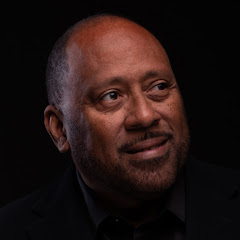
0:05 All right, welcome to it, a very exciting one of Frankly Speaking. I'm here with probably one of the biggest cultural icons in history, and when I talk about being a cultural icon, I'm talking about in the world of hip-hop, which obviously for the whole world is one of the biggest cultures in the world musically, financially, you name it. Hip-hop is it. And I am here with one of the creators of that culture, the one and only DJ Grandmaster Flash, my guy. Come on, baby.
0:42 Thank you for bringing me in, man. Come on, man. Appreciate it. How do you feel when people introduce you like that? Makes me nervous.
0:50 Does it really? Because you know what, I always look at myself, I'm like, I'm— we're all born with gifts. Yeah, yeah. I'm just a guy. And but you're just a regular guy I know you as just a regular guy.
1:03 Your family and personal friends probably know you as a regular guy. Yes, sir. But you are more than that, bro. You ushered in something that is a multi-trillion dollar industry, and you single-handedly made it what it was. When you talk about the elements of hip-hop, right, you talk about the DJ, the MC, The dancer, breakdancer, and graffiti artist.
1:29 Yes, sir. But it's not just the DJ, it's the way the DJ played, because not every DJ goes in the genre of hip-hop, and you created that genre. So when somebody says that to you, you know, I, I don't, I don't even know if you fathom as big as it is. You know, Frank, when people talk, talk about me like that, in love of course, I, I say to myself, I go back to the days of when I was experimenting, trying to make it all work, and I'm like, this thing could have missed. You know, as being an inventor, this whole thing could have just been like, ew, what is that?
2:14 But you know what it was? It was, what is that? And it was just that crack of daylight of what is that? That interest is what catapulted it for many people to want to do this thing like I was doing it. So it's very fortunate, just very fortunate.
2:34 Earlier we had a discussion about your brand new book, The Birth of a Culture: Grandmaster Flash. And in that discussion you talked about seeing records for the first time and seeing your father put that record on the record player and the sound that came out of it, right? And that was your first, like, hook. Yeah. To get in.
3:00 Yeah, that was big. I had this fascination with this routine that my dad used to do with these square things that had like pictures of trains and cars and clouds and houses. I used— as a toddler, I was like wondering, like, what is he going to do with that? Then when he pulled out the black circular thing that was inside the square thing and he went over to the brown box, and the brown box had sound come out of it, that was the absolute beginning of my fascination. And I had to get my bottom tanned quite a bit because I, I wanted to touch it.
3:49 I wanted to know why it did what it did. And I was touching it during times and periods when Dad wasn't around. He didn't want anybody near his stuff. As soon as he was out of sight, You was in it. I was in it.
4:08 You know what's crazy about that is my father was the same way, and he would, he would work in the evenings, and I would do the same thing. I would go get his records, and he had a lot of old school. Like, he was, you know, back in the day, my dad was part hippie, part R&B, part everything. Like, he, he had white artists and black artists and jazz and this and that and rock and roll. He was Rolling Stones George Benson, you know, all of it.
4:38 And, and that's how I love music today. See, what happens is, as, as shorties, as we're shorties, Frank, we're hearing the family put certain things on the stereo, and that's like influencing, like, what's that? And then when we become of age is when we said, okay, we were shorties and we couldn't touch things, but now we want to experiment with it. And here we are. You're a great DJ.
5:07 So just, it is what it is, man. I mean, I, uh, I try to sit back and think about it. I say to myself, damn, I used to get my butt whipped so much for touching this, so much, so much. But the second I became able as a teenager to start tinkering, tinkering around and stuff, oh my goodness. Like, I didn't do the things that teenagers did, Frank.
5:30 I just Couldn't. You talked about earlier, and I want everybody to understand, you talked about you were inquisitive and used to take apart electronics. Anything that plugged into the wall that a light turned on, I'm like, what's in the wall that's making this TV turn on, or this stereo, or the table radio, or my sister's hair dryer? Like what's happening that they go over to the wall and push this thing in and things light up. Oh man, I was a mess.
6:06 Like, as soon as my sisters would turn their back or moms would turn their back, I was getting a butter knife and unscrewing the back to try to figure out how is this actually happening and why. The great big why, man. Why does this do what it does? And Against all odds of getting a spanking, getting screamed at, getting cursed out, is the great big why, why, why, why was the driving force for me. Why?
6:37 And eventually you went to a technical high school. Yeah, Sammy Gumpus Vocational and Technical High School. Then I started to understand, you know, what's coming out of the wall. You know, and then it's DC, and then it's, you know, I always wondered what was FM and AM, this frequency modulations and amplitude modulation. And, uh, what is a breadboard?
7:01 What is schematic diagrams? You know, uh, what's fluorescence versus incandescence? Like, who's Tesla? Who is, uh, uh, uh, Westinghouse? You know, these, these, these, these Edison also.
7:16 These people did groundbreaking things that made me want to do what I call reverse engineering, because in order for you to find out what an object does, you got to go in reverse on how it was built. And that's where I took 3 to 4 years of my teenage years, Frank, and just didn't go out in the parks. I didn't go ahead and chase the chicks. I didn't to all that. I just was going in the backyard and getting stuff and just trying to figure it out.
7:48 And if it wasn't in the backyard, I was going in the house and I was unscrewing it from somewhere, just trying to figure out why, why, why. It goes back to the great big why, Frank. Like, why? But so, so for everybody watching, I just want to let you know what he has said. I'll interpret it for you, that Grandmaster Flag was a geek before the word geek was a thing.
8:12 You were already the geek, boy. You was already tinkering, taking stuff apart, trying to figure out how stuff worked. And it makes a lot of sense because what you did, you created a technique that changed the world. That one technique changed the world. Talk about the progression of making music with your hands and the record.
8:40 As a toddler getting ready to go into adolescence, I always wondered when Dad will pull that black— I mean, the, the black circular thing, and he would go over to the brown box and he would press this button, and this arm thing would go up, and the black thing would go down, and the arm would go on that, and then sound would come out of the brown box. The gigantic Y was where is the sound coming from? Because if nobody was near the brown box, Frank, that box don't do nothing. It does nothing. But Dad takes this black thing and he puts it in the brown box, and then the brown box and the black circular thing do something and sound comes out the black box.
9:35 I went through years and years and years of trying to figure out what that was. And I have to say, my mom and my dad were my first inspirations to this. So on the mom's side, mom was a seamstress, you know. So I remember when it really got to the point, Frank, when I said, I gotta figure out where the sound's coming from. So I would take one of mom's sewing needles that she would use to sew clothing, and I went over to the brown box with, with a black circular thing.
10:07 I put it on because I watched dad do the procedure, so I knew how to do it. And as the record spun up, I took the needle and I put it on the black, uh, the black circular thing, and I felt vibration in my fingers, Frank. I was like, wow, wow, the sound is in the black tunnels. That's where the sound's coming from. But it could only happen when the brown box is turned on and the black circuited thing.
10:45 These 2 work together. But as I became older is where I added kinetics to the whole thing. Okay. And the kinetics is this: when the vinyl is on the platter and it's spinning and the stylus touches the vinyl The two of them interacting is kinetic energy, right? And that kinetic energy goes through the amplifier and is turned into electrical energy, and then it returns back to kinetic energy when it comes out of the, out of the speakers, and that's called sound.
11:22 So it's kinetics, electrical energy, and then speakers. You are such a geek.
11:33 And I got a tape, right? If I try to say this 40 years ago, people probably would have put— wanted to put me in a mental ward. Yes. I would have tried to say this 30 years ago, people say that, blank, uh, Flash is really losing his mind. If I would have tried to say this 20 years ago, yeah, then be like, yeah.
11:53 If I try to say this 10 years ago, no, no. But you telling your story now and it makes so much sense. So mom is a seamstress, right? Your dad is like working on the railroad, right? Trackman.
12:11 Yeah. So I've heard you tell this story before, but in order for you to be able to hold the record because it had a rubber mat on the bottom at the beginning, how did you switch that out? What made you take the rubber mat off? Let's go back to this great person. That made me really intensely want to study compositions.
12:33 His name is Curtis Mayfield, and he had this song called Move On Up. And that drum break is what I noticed when that drum break played, whoever was on the living room floor dancing, the backsides would move more. And that's what I said to myself. So The rest of the song was good. The intro, you know, first verse, chorus, second verse, drum break.
13:05 The bodies, the backsides would move more. So in my mind, Frank, I was saying to myself, that part is more important than the rest of the whole record. So any record that I now would listen to, I had listened to it from a different perspective, okay? And I had to know how long the drum break was. And all these other records I listened to, Frank, the drum break was like 5 seconds, 8 seconds, 4 bars.
13:32 I was pissed off with that. I'm like, why is it that Curtis Mayfield, who was a genius doing what he did, why is it that these rest of these songs don't have this important part as long? Yeah. As Curtis had them. And then I had to figure out— now I'm like 13, 14, and I'm saying to myself, if I can figure out a way to take these other songs that had the shortest drum breaks by going counterclockwise— and that's where it started.
14:09 Because if I tried to pick up the arm— you're a DJ, Frank, and you do, you know, once you pull the arm up the chances of you dropping it the same exact place is almost impossible. It's always someplace else. So I said to myself, I have to somehow come up with a formula that makes the, the tonearm 99. 9% useless. So what I did was I put the vinyl on the record, turned the power on let it power up to speed, and I tried to go back, but I know I noticed that the platter was going back as well, and that's the enemy. So I picked the record up and I said, oh, so what is this?
14:56 It was removable, this rubber pancake thing. I was like, okay, this is the enemy. And I said to myself, Sam, um, My mom's seamstress, uh, polyester, rayon, silk, satin, cotton, denim, suede, leather, felt. Felt. I remember felt because in grade school we used to cut out letters and use Elmer's glue and spell words and You bring that home to your mom, you get 5 stars, you know.
15:36 So I, I was, I was very identifiable with felt. But the issue was it was too limp. So I would go up in a cabinet and get the spray starch after I cut each piece of this felt the same size as the album. I would iron it on both sides to make it more rigid. And then I took that and put— I took that rubber piece off, threw it away, took the felt and put that on a metal platter, turn the turntable on, put the album on the felt, and I've still seen a degree of disagreement.
16:13 Yeah, with the platter going clockwise.
16:17 Now that's what I remembered. My sisters and mom, they do these things with wax paper when they're baking, and I took that I cut it the size of the album like I did it with the felt, and I removed the felt off the metal platter, and I put the wax first, and then I put the felt on top of the wax, and then I took the album and put it on top of the felt, turned the platter on until it was up to speed, and then with my fingertips on the body of the vinyl, I went counterclockwise, up and down, and the, and the platter kept moving, was in agreement with what I was doing. Wow. And that's pretty much where, you know, one of many problems was pretty much solved, Frank. First time you're, um, you're playing, you didn't really get a good response at first?
17:16 Only after the 3 years of me staying in the house and not going to the to, to the parties and hanging out, you know. I, I said, I'm, I'm gonna make me a makeshift system when I go up, and I'm gonna go to the nearest park, and I'm gonna just play the drum breaks of these pop records and these jazz records and these blues records and this funk, like all the different genres of records where I can find that break. And I'm gonna play all of them one behind another, and the park is gonna be going crazy. And the damn park was as quiet as we're doing this interview right now. And I was Oh man, what is wrong here?
17:51 Yeah, you know, so I tried again the next weekend, but then the problem was, Frank, people were just staying standing around going under the table looking to see, is this some kind of magic trick? Because of my manipulation on how I made these records do what they do just didn't make sense at that time in the '70s, in, in the, uh Early '70s. Who was the first person to pick up a mic for you while you were DJing? What I did was I figured I can't get them to— I can't stop them from looking at me. So I took a microphone, put it on the other side of the table, and I let anybody, anybody that can talk to the beat, to this new style of DJing.
18:35 And it was this gentleman by the name of Keith, Keith Wiggins. His name was Cowboy. Cowboy. Cowboy. So he was able to say things kind of like vocal aerobics.
18:46 Do this, do that, do this, do that. So now you took all the attention off of me, which is what exactly what I needed. So now I can go into my pop breaks and my funk breaks and my disco breaks and my R&B breaks and my all, all these, and put them all on time to the beat while he's speaking. This got around This kid named Flash is doing something on the turntables that's never been done before. And all the big DJs at that time was like, he's that dude that puts his hands on the record, which was blasphemy.
19:21 You're a DJ, Frank, you know, and that, that could be considered like blasphemy. What do you mean you're putting your finger, you're putting your dirty hands on the body of the vinyl? But that was the only way I was able to get control. But then I needed to see the break in the dark places where I played, and that's what I put a crayon mark. You put a crayon on the record?
19:41 On the record, white or yellow, so I could see it in dark places. I had to, I had to be able to see what I was doing as well as hear. So you put, you put a crayon and you marked circular, and then I'm— and then from the center hole of the record, I put what's called the interceptor mark. And where the circular and the interceptor met was where the top of the break was. And then what I would do is count how many times that line would pass the tonearm in a forward position, and that would go counterclockwise the other way.
20:13 So I could take a drum break that's 2 seconds and make it 10 minutes without anybody knowing that I'm actually cutting and pasting manually. Wow. Who was the first family member that started noticing that you were becoming breakout popular? Probably my sister Penny. But I mean, she was— she had her own life, but she was older than us, me and Lily, and she took somewhat of an interest of what's little Joe doing.
20:48 And then she would go on with her life, where my other 2 sisters, they were growing up grown-ups, they were doing the grown-up things. But my sister Penny was like, um, she would come in and kind of just look in and then go about her business. But Penny probably was the first one. And then my baby sister Lily used to just sit in the room with me just to just watch me, not being able to really understand because she was too— Do you remember when you first got popular? I remember when I first— what do you call it— when people just ran the table.
21:18 That's when I knew I was popular because they were trying to figure out what it was I was doing. Do you remember the first flyer with your name on it? Oh God, um, let's see, Ray Chandler, right? There was this guy in the areas where I used to do my block parties. There was this family called the Chandler Brothers.
21:37 The Chandler Brothers were the ones who ran the numbers, gave you what you needed. Yep. Uh, had the supplies. If somebody was doing something wrong, they knew how to get rid of you. Like, these people were feared.
21:58 Yeah. So there was this one guy that used to come to the fence, Frank, and watch me. And while I'm playing, I would always see this guy, you know, watching me. Frank, this guy must have been about 6'6. Very fair-skinned, very light-skinned.
22:18 And every time when I would break down my equipment, he would come to me and say, you could make money with that. And I would blow him off, like, get out of here. I'm like, who are you? He said, my name is Ray. He came to me so many times, Frank, to say you can make money with this.
22:37 I would tell him, go to hell, F off. So-and-so. And then people started coming to me and saying, do you know who you talking to? I'm saying, no, it's this big tall guy. You know the Chandler brothers, right?
22:51 He, he's the main one. You're telling him to fuck off. Maybe the 7th, 8th time that he came to me and says we can make money, I said, okay, let's do that. And he was right. He found me a place maybe the size of this room.
23:07 And we packed that up and then the rest was history. We would just dominate the Bronx, dominating, dominating, dominating. He had a genius plan. He says, this thing that you do in this turntable, it's special. Uh, I thought it was just regular because I would go to different block parties not making any money, sound systems sound like crap.
23:25 What was your first DJ name? DJ Flash. That's it, just Flash. You started straight off at Flash? Yeah, because Actually, I got Flash because I ran fast.
23:36 So I got my, my name from Calvin Jackson and a guy by the name of Gordon Upshaw because we used to run races a lot and I used to run very fast. So I got Flash that way. But then— so it wasn't because you were faster on the turntables? No, it was. But I want to explain to you how originally it was because you ran fast.
23:58 There was this one guy that used to come to the parties because we didn't allow any— no armor in the club, right? But it was this one guy because we feared him so much, except me. His name was Joe, and I would say, Joe, come on, you know you can't bring that heat in here. I said, I'll tell you what, bring it in and I'll hold it for the whole night because he was a hothead. And then maybe '72, in the dead of winter, he says, damn, you handled those turntables like a grandmaster.
24:36 And I looked at him like, what, from karate movies? So I went in a dictionary. This is 100 years before the internet. I'm going into thesauruses, into dictionaries. I'm trying to find out what this word Grandmaster means.
24:53 And there were 2 things, there were 2 forms that we early hip-hoppers respected the name Grandmaster for. Bruce Lee was a grandmaster. Yep. And this guy named Yuri Garry playing chess was a grandmaster. So I brought the idea after I was saying it for 3 weeks, Grandmaster.
25:17 Flash, Grandmaster, Grandmaster Flash, Grandmaster. I had to get used to saying it. Then I says, yo, Ray, I think I'm gonna put this front. Joe Kidd said this to me, and I want to put this in front of Flash. Grandmaster Flash.
25:33 And that's how I got my name. So I ran fast, and I got that from Calvin Jackson, and then I got Grandmaster from Joe, and it just put the two together. So the name was given to me by other people. You know what's interesting, and, and I got to say this, sometimes people ask me even about my name, Frank Ski, and my interpretation was growing up at that time in New York that only the best DJs— because there were other grandmasters that came up after you— that only the best ones were allowed to be called grandmaster. That was the code of the streets.
26:08 That was like a code. Yes, it was, right? So people would say, well, how'd you come up with Ski? And I, I would say, you know, my first name was Frankie D because everybody put D at the end of their name. Yeah, right.
26:21 And then, and then I heard somebody say, well, you know, if you the shit, you can call yourself Ski. And I— that's how I came up with Ski, because— but I wasn't the first Ski. There was a lot of Skis in New York. But you was a shit Ski. But somebody told me you can call yourself Ski if you the shit.
26:39 And I was like, okay, I'll change it from Frankie D to Frank Ski. And that's how— Did it catch the people? Did it catch? It caught on. And I remember when I was offered my first radio job in DC, the program director was the FM radio station.
26:57 I was big in the streets DJing. And he said, I want you to come and do a radio show. And he said, but you got to take Ski off your name. And I said, but you found me because I'm Frank Ski. And I turned my first radio job down because they wanted me to change my name.
27:16 That's how important a name is. So, so that's an interesting story, that how you got to be Grandmaster Flash. Like, you could throw something at your audience, at your flock And if they go for it, it's— you gotta stay with it at all costs, even if you have to say no to something that's really good. Wow, sounds great. How did it feel?
27:40 How did it feel for you moving forward? How did it feel for you for somebody to say, we want you to make a record? I mean, you got to understand, back then that was, that was taking it from the street to, to another level. I can tell you this story. Um, after we dominated the Bronx, we started going to different boroughs, and we did this club in Harlem.
28:07 And, uh, by this time I had security that would roll with me, you know. So we DJing a party, and this— oh, this man looks too old to be in my party. So I say to Tiny, who's headed to Casanova's— this was my security crew— I says, from Casanova all over, right? I says, I says, Tiny, if he does one false move, the Casanova's— if he got the beat down, it reverbed through the whole New York City. So I said, Tiny, have the crew watch him.
28:37 So we watched him go to the bar, get a drink, Frank. He didn't do anything wrong. He was respectful. So we would say to ourselves, Either he's looking for his kid or he's the police. So we was trying to find every reason possible to get him out the building, but he didn't do anything wrong.
28:55 He paid his fare, came in, and just stayed at the back of the room. So as I'm breaking down my, uh, my system, he says, uh, Mr. Grandmaster Flash, may I have a word with you? You know what I'm saying? Yeah, sure. The security moves up and, uh, he says, I want to make a record with you guys.
29:18 So I'm looking at him, what do you mean? He says, the same thing that you just did tonight, I want to record you and make that a record. And I says, what do you mean? I don't understand what you're saying. He says, the way that you play And in a way, the boys MC, I want to record you and make a record.
29:44 I said, what are you talking about? So he says, my name is Bobby Robinson and I have a label called Enjoy Records, and I'm trying to explain to you what it is that I want you to do. It started to get me annoyed, so I said, I don't want to talk to you. So he was escorted out. A year later, I hear To the Hibbity Hibbity Hop Hop.
30:09 Wow. And I said— I froze and I said, this is what Bobby Robinson was trying to explain to me about taking this new art form and putting it on vinyl. I damn near told him to go to hell. And this record to the hippity-behippity hip-hop. And so I'm, so I'm putting the APB out.
30:38 Who is this group? You know, I'm checking Cool Herc's side, I'm checking Bambaataa's side, I'm checking Breakout's side, I'm checking second-level groups. Like, who is this group? And they say it was some group on a t-neck in Jersey. I'm like, I don't know them.
30:56 This record was everywhere. You flip the station, if it ended there, you flip the station, it started there. That this record was like everywhere. And I said to myself, damn, damn, damn, that what he was trying to explain to me how to make— wow. So you fumbled the bag.
31:22 Grandmaster Flash fumbled the bag. You could have been the first hip-hop record ever recorded in postmodern hip-hop. Yeah. And you fumbled the bag. What the hell are you talking about?
31:38 What do you mean you want to record me? What? I'm like, okay. Oh my God. Yeah.
31:45 So that happened. And we had a record out called Super Rappin', but it wasn't But it wasn't do— it wasn't doing what this record was doing. This record was killing it. It was the longest damn rap record, but nobody cared. The radio station didn't care.
32:00 They played that damn thing to the end. Then they made short versions, this, that, that. The record was killer. It was killer. Tell the story, um, Fab Five Freddy brings Blondie, who was huge.
32:16 Blondie comes along and put your name in a song. Fab Five Freddy was a good friend of ours. He would always come to the flash parties. Um, he said, yo man, I know this, I know them. Like, I know Chris Stein, you know, who's her husband, you know, and, uh, I know Blondie.
32:34 We're looking at him, he Black just like us. Where you going? Where are you traveling to to know where these people are who's making huge pop Records. What do you mean they're your friends? And he said, Flash, watch, I'm gonna bring her one day and she says, I saw you play and I'm going to make a song about you.
32:59 So I was cordial when I heard about it. Yeah, okay. 6 months later, our album's not finished, but there's this song That sounds nothing like something that hip-hop would make. But this damn record is playing everywhere. And she's talking about this guy on how fast he is on the turntables.
33:25 And then there was a phone call made to Sugar Hill Records that they wanted me to be in the video.
33:36 And Sylvia Robinson said no. What? She turned it down. And I found out because the woman who handles the phones in the front grew a good friend of mine. She said, yep, Sylvia turned it down.
33:51 Oh, I was so mad. I was so mad at that. So you'd have been out of here. Yeah, I'd have been— yeah, I'd have been on Pluto already. Yeah, heading for the next universe.
34:02 So, but You know, things happen for a reason, you know, and maybe it wasn't meant for it to happen, but for her to make that decision without even— I think she said to me, uh, yeah, there was some record company calling wanting Flash to do something. She just kind of just brushed it off. Oh, I was so mad at her. Wow. So, so, so mad.
34:24 So how did you wind up making The Adventures of Grandmaster Flash? Okay, um, I mean, because that was the first time anybody had ever had a bunch of people's songs on one song. We was touring with Rick James. Me and Rick James became really close, and then there was a break, Frank, where there was nothing, you know, nothing scheduled. So they, they made a phone call to me saying, Flash, remember that record you was bothering us about wanting to make?
34:54 We got the time now, so I'm gonna fly you back and you're going to make it. I was like, bet. So she says, all I ask that you don't— she says to me, as long as you put Sugarhill Records in the mix. I'm like, okay, let me figure that out. And then I just— and I had to pick, uh, what, 7 to 8 records?
35:15 Let's see, Another One Bites the Dust, uh, Good Times, Apache, Uh, and I had to put these into a mix. And I remember, Frank, when I was recording this, first I had to go home and practice it, practice it, practice, practice, practice, practice. And then I says, I'm ready to go into the studio. And I remember when I was recording it, first try, halfway through, I think I miscued another one, Bite the Dust. I says, Rewind.
35:49 He says, no, we can punch. I said, no, we are not, you know, punching this way. You know, they get this here. I said, no, hell no, we're not punching. They said, you sure everything else was great?
36:00 I says, no. We go back to the top. You say, you say, all the way through, all the way through. At the end, I missed Apache, the throw. I says, oh my God, now he's fighting with me saying, come on, Flasher.
36:14 I think I said No, erase the tape. Third time I got the whole thing because you got to understand this here, Frank. If I can't do it in the studio, then I can't do it live. I had to get over the, the weeby, weeby jeebies because it was— it usually takes me a couple of weeks to really get a routine down up here where it's in me. But I only had 2 days.
36:44 So me missing it the first 2 takes, the 3rd time I just breezed through it. So when I was asked to do it live, I used 3 turntables so I wouldn't miss anything, and that's how the record was made. Wow. So last question I have for you. Yes, sir.
36:59 So you get inducted into the Rock and Roll Hall of Fame. Whoa. And now a star on the Hollywood Walk of Fame. Did you ever think, Frank, you never know when you're going to get your blessings? I think it goes back to my dad tanning my hiney over and over and over again.
37:21 And then to get this star for the Quick Mix Theory, and I'm sitting next to like Paul Anka and, uh, like super TV stars and super movie stars. I mean, I'm in company with them. Wow. I don't know how to tell you how I feel because I don't know. I, I don't know.
37:46 It's just, yeah, I don't know. What do you, what do you say to God after something like that? I talk to God almost every day. What do you say? Thank you for my health, my strength, my mental My family, my staff.
38:08 Even when days is rough, I say there's a lesson in the blessings and there's blessings in the lesson. Because sometimes I'm doing something and I'm going to learn my lesson from it, either to do it or don't do it.
38:21 So I say that God is responsible for all of this, for all, for all of this, all the ups and downs, all the times I got taken advantage of, all the times that I held someone close and he stole from me. It's just, here I am now. Here I am, Frank.
38:43 And God says in the Bible, I can't say exactly what it is in the Bible, but it's just stay humble. Yeah. And all your blessings will come to you. So I've been following this way for decades. So So when I'm walking in the street and people say, like, they put me on this super high pedestal, I say, no, no, I'm not that.
39:06 They say, well, they say you're a legend. I said, no, I'm not, I'm just a guy. And then they say, no, you're not, you're a legend. And the reason why I'm afraid of the word legend is because a lot of times, Frank, people that are legends, either they disappear into the sunset and you don't see them anymore, or they die early. I'm afraid of that.
39:27 I'm really afraid of that. So for me, if I can be the people's DJ, I'm, I'm good with that. I don't know how to brag and boast because it's not mine anyway. I was just a vessel for it. That's how I feel about it.
39:44 What do you want people— when God calls you, what do you want people to say about Grandmaster Flash. Frank, I try my best in all the years that I've been on this earth to not— I don't care about my birthday, and it's on January 1st. I don't care. I don't celebrate it. Most of the time I'm working.
40:09 I don't do no big hurrah. What's important to me is my death day. What can I leave so that the next people that see this take this to the next level? That's what's really important to me because it took me so long to get here, and this thing that I did impresses so many people on planet Earth. What will somebody come and take this thing and say, I'm going to add this to it.
40:46 Because when you say Quick Mix Theory, it's an open concept. There could be something that even I didn't do that needs to be in there to take this to the next place. Whoever that person is, go ahead and do that. That's where I'm at. Thank you for being so humble.
41:05 I don't know any— I mean, I can get pissed off and like, like the next person, if somebody piss me off. But for the most part, you've always been level, cool. You used to walk into Frank Ski's by yourself, come up to the DJ booth, give me a hug. Yeah, hang out, listen to me play. Yeah, and that's what it was.
41:23 We talk about mixes, we talk about this and that, or we sit there and I even hang out when it was closed and I would still hang with you guys and just talk to the cooks and talk to people. Like, yeah, we're all born with gifts, Frank. You can't take it with you, so what you bragging for? You know, I, I, you know, another thing that really makes me crazy before I have to leave here is I see some people go from zero to have everything and they go do something and lose it all when all you had to do was allow the gift to be the gift and not go out of your way to blow it. I see people go from nothing to having it all and do things that doesn't work in line with God.
42:16 And they blow it, Frank. And we're all not perfect. And I've done stupid things as well. But you got to come back to God because we're not perfect. And I'm far from perfect.
42:28 And I've done some things where I had it all and I blew it. But as you get older, you got to get smarter. Yeah, Frank, you got to get smarter. You can't— because if you don't, you'll end up in that same place. I've done ridiculous things that I should have avoided.
42:48 And once you learn, you try to do the right thing. God is always watching. Yep. That's it, man. That's it.
42:55 I, I, I, I've been some— I, I've been in some real things like with the drugs really bad. And I remember passing out, and I think God talked to me and says, I'm gonna let you come back one more time. Wow. I'm gonna let you come back one more time, and if you blow it, I'm taking you. And I had my girlfriend at the time.
43:24 This is early in my career. And my sisters, and they nursed me back to health. Otherwise, I wouldn't be here. So you do some things, so you just try not to just do it again. Yeah.
43:39 So here we are, you know, like, you know, so it's like your name rings bells in the street, my name rings bells in the street. After a while, you got to get smarter with it, you know, because There are people that want to be like you. There's going to be the next Frank Ski that wants to be like you, the next Grandmaster. They want to be like me, so why not? That's it.
44:05 Let them go. Amen. Amen. I'm big on God, my guy. Love you, baby.
44:12 Love you.